 Request an assessment
MINIMUS · GIRONA
Tailbone pain and coccydynia
Assessment of tailbone pain and treatment options at MINIMUS.
Why sitting can hurt, how pain is investigated and which options may help when symptoms persist.

WHAT IT IS
Coccydynia: when sitting hurts
Coccydynia is pain in the coccyx, or tailbone, at the bottom of the spine. It may increase when sitting, standing up from a chair or putting direct pressure on the area. Persistent pain can affect work, travel and everyday life.
CAUSES
One symptom, different causes
Pain may follow a fall, childbirth or repeated pressure. Some cases involve abnormal coccygeal movement; others have no clear trigger. Other causes of pain when sitting must also be considered.
DIAGNOSIS
Finding the source of pain
Medical history and examination guide the assessment. Depending on the findings, X-rays, including views in different positions, or further tests may be appropriate. Images are interpreted alongside symptoms before selecting treatment.
FIRST OPTIONS
Treatment starts without surgery
Posture and pressure adjustments, coccygeal cushions, physiotherapy and individually prescribed medication are initial options. Persistent symptoms may warrant injections or nerve blocks. Surgery is reserved for selected patients with limiting pain and an insufficient response to other measures.
ENDOSCOPY
An approach requiring a precise indication
Endoscopy uses a camera and small access points to view the working area. Techniques have been described for refractory cases, but specific evidence remains limited. The target structure, purpose and alternatives must be defined before treatment.
PERCUTANEOUS FIXATION
Coccyx preservation and stabilisation surgery
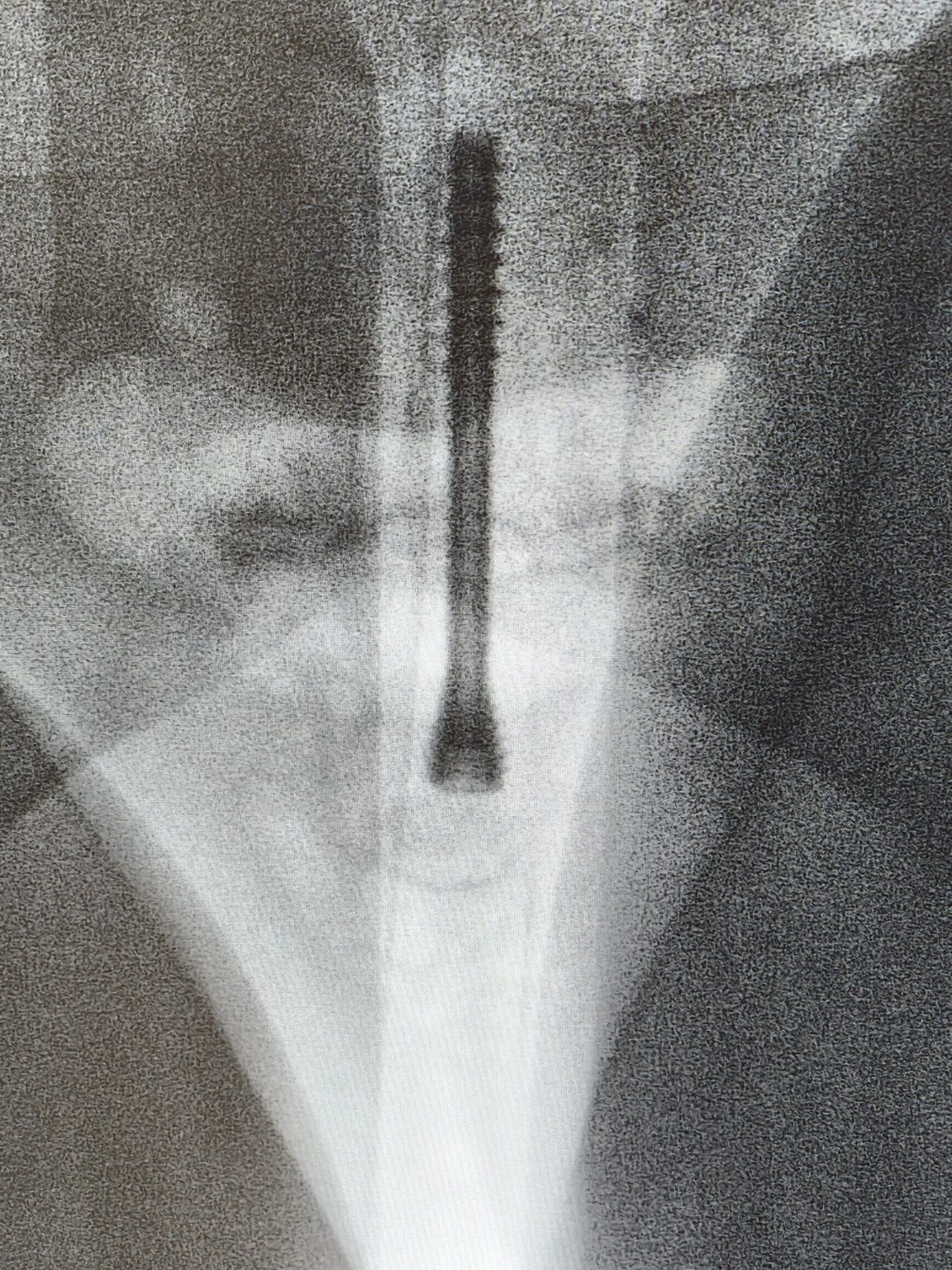
For selected mechanical lesions, preserving and stabilising the coccyx may be considered. The technique described by our team involves reduction and fixation with a cannulated compression screw through an approximately 3 mm percutaneous access under real-time fluoroscopic guidance. Suitability depends on the lesion and anatomy; oedema alone is insufficient. The goal is to restore alignment and stability. Any graft or biological support is defined individually.
Under the team’s protocol, selected patients undergo this procedure as day surgery, with same-day discharge if recovery is satisfactory. This arrangement does not automatically apply to other operations. Wound care, sitting adjustments and follow-up of stability and bone healing, where appropriate, are explained individually.

PLASMA
Platelet-rich plasma as a regenerative treatment
We use platelet-rich plasma (PRP), prepared from the patient’s own blood, as a regenerative treatment within a personalised care plan for coccydynia. Its application is tailored to the injury and each patient’s needs.
INJECTIONS
Injections for coccygeal pain
Injections target selected painful joints or tissues. Local anaesthetic provides temporary pain relief and corticosteroid aims to reduce inflammation. The preparation and imaging guidance are individualised. A useful response can inform treatment but cannot identify the pain source with absolute certainty. Allergies, diabetes, anticoagulation and bleeding or infection risks are considered.
NERVE BLOCK
Ganglion impar block
The ganglion impar lies in front of the sacrococcygeal region and participates in pelvic and perineal pain transmission. Blocking it targets a nerve pathway rather than injecting a joint. It may be considered for persistent pain after conservative care, using an appropriate target and imaging guidance.
PULSED RADIOFREQUENCY
Modulating pain signals
Energy is delivered in intervals to modulate pain transmission while limiting heating. Selected targets include the ganglion impar or coccygeal nerves, depending on symptoms, anatomy and previous responses. Its purpose is symptom relief and functional recovery; it does not stabilise a joint or heal a fracture by itself.
CONTINUOUS RADIOFREQUENCY
Thermal treatment of a nerve target
Controlled heating acts on selected nerve fibres. Indications and settings differ from pulsed radiofrequency. The target nerves are identified and risks are discussed, including pain after treatment, sensory changes, bleeding, infection and injury to nearby structures.
OTHER SURGICAL OPTIONS
Coccygectomy: partial or complete removal
Coccygectomy removes part or all of the coccyx. It may be considered for persistent disabling pain after appropriate alternatives have failed and findings support a coccygeal source. The extent of surgery, wound care, infection risk and possibility of persistent pain are discussed. It differs from surgery intended to preserve and stabilise the coccyx.
RECOVERY
A plan tailored to the procedure
Care, pressure when sitting and return to work depend on the procedure and progress. Instructions are specific to each technique. Discharge timelines for endoscopic spine surgery do not automatically apply to coccygeal procedures.
FREQUENTLY ASKED QUESTIONS
Choosing treatment according to the cause
Does everyone need surgery?
No. Treatment usually starts with pressure relief, activity adjustments and physiotherapy. Interventions depend on the cause and progress.
Which tests might be needed?
Examination guides the choice of X-rays, dynamic views, MRI or CT. Other tests are considered in specific cases. Not everyone needs every test.
Can the coccyx be preserved?
This may be considered for a specific mechanical lesion when anatomy and the indication allow stabilisation. It is not suitable for every type of tailbone pain.
How is progress assessed?
Pain, sitting tolerance, function, duration of response and adverse effects are reviewed. Bone healing is also monitored after fixation where appropriate.
Systematic review of coccydynia treatments · Review of clinical trials · Endoscopic approach: published case · PRP study
Patient information. Treatment selection and follow-up are individualised at consultation.
MINIMUS · GIRONA